In an HMO in England, the manager (usually the landlord or their managing agent) must keep shared areas clean and in good repair, and let each room and its furniture in clean condition. So bed bugs in common parts, or there at move-in, are theirs to deal with. Tenants must report problems, allow access and follow reasonable instructions.
Reviewed by James Rhoades, Owner, ThermoPest · Last reviewed 16 November 2026
Bed bugs in a house in multiple occupation (HMO) raise questions a single let doesn’t. Several households share a kitchen, a lounge and a front door, and when one room reports bites, everyone wants to know who has to act and who pays. This guide for HMO landlords, managing agents and tenants in England covers the HMO management rules, who does what, and how to handle a report from one room.
Why Bed Bugs Are Different in an HMO
In an HMO, residents come and go often, share sofas, kitchens and laundry, and sleep side by side behind partition walls. Bed bugs crawl along skirting, through gaps around pipes and cables, and travel in bedding, bags and clothes, so a room that reports bites is often just the first to notice. Our guide on whether bed bugs spread from one room to the rest explains how they move inside a building.
Bed bugs also say nothing about how clean a house is. The NHS says they “are found in both clean and dirty places”, and that it’s very difficult to get rid of them yourself because they can be hard to find. In shared housing, blame can quickly fall on whoever reported first.
Who is responsible for bed bugs in an HMO?
On top of general landlord law, HMOs in England have their own rules: the Management of Houses in Multiple Occupation (England) Regulations 2006, made under section 234 of the Housing Act 2004. They set duties for the manager and the occupiers.
The Manager’s Duty for Common Parts
Regulation 7 says the manager must ensure that all common parts are “maintained in good and clean decorative repair”, “maintained in a safe and working condition” and “kept reasonably clear from obstruction”. Common parts include entrances, halls, staircases and corridors, and “any other part of an HMO the use of which is shared by two or more households”, with the landlord’s knowledge. A shared kitchen or lounge falls into that. The manager must also keep fixtures, fittings and appliances used in common, such as kitchen units and washing machines, in good repair and clean working order.
The Manager’s Duty for Each Room
Regulation 8 says the manager must ensure that “each unit of living accommodation within the HMO and any furniture supplied with it are in clean condition” at the start of each person’s occupation. In a furnished HMO, that includes the bed, mattress and sofa the landlord supplies. It also requires the internal structure to be kept in good repair, which matters where gaps let bed bugs move between rooms. These duties don’t cover things the occupier brings in and can take away, and the manager doesn’t have to carry out repairs needed because an occupier hasn’t used their room in a “tenant-like” way.
Who Counts as the Manager
The “person managing” is defined in section 263 of the Housing Act 2004. It’s the owner or lessee who receives the rents, and it includes an agent or trustee who receives the rents on their behalf. If you’re a managing agent collecting rent for an HMO, the management duties are likely to apply to you as well as to the owner, so agree in writing who handles pest reports. Under section 234, failing to comply is an offence (with a “reasonable excuse” defence), and councils can issue a financial penalty instead of prosecuting.
Where HMO Licensing Fits In
GOV.UK says a large HMO needs a licence if it’s rented to 5 or more people who form more than 1 household, some or all tenants share toilet, bathroom or kitchen facilities, and at least 1 tenant pays rent. Some councils also license smaller HMOs. GOV.UK says the manager (the landlord or an agent) must be considered “fit and proper”, and the council may add conditions to the licence. The management regulations apply to any HMO in England (other than certain converted blocks of flats), whether or not it needs a licence, so a smaller shared house isn’t exempt.
The Tenants’ Duties
Occupiers have duties too. Under regulation 10, each occupier must not “hinder or frustrate the manager” in carrying out their duties, must allow the manager “at all reasonable times to enter any living accommodation” for purposes connected with those duties, and must give the manager information they reasonably need. In practice: report bed bugs, let the inspector and technician in, and follow reasonable preparation instructions.
Who Does What: A Quick Guide
| Area or task | Manager (landlord or agent) | Tenants |
|---|---|---|
| Hallways, stairs and landings | Keep clean, in good repair and clear of dumped furniture | Report signs; don’t leave mattresses or sofas in shared spaces |
| Shared kitchen, lounge and laundry | Arrange inspection and treatment; maintain shared appliances and furniture | Report signs; don’t move bedding or furniture from bedrooms into shared rooms |
| A tenant’s room at move-in | Let it, and any furniture supplied, in clean condition | Check the bed and report anything within the first days |
| Gaps in walls, skirting and around pipes | Keep the internal structure in good repair | Report damage |
| Access for inspection and treatment | Give notice and explain what will happen | Allow access at reasonable times; prepare the room as instructed |
Who pays for bed bug treatment in an HMO?
In most cases, the landlord arranges and pays for treatment, at least to start with. Shared areas and supplied furniture are the manager’s responsibility, and Shelter says that if pests were there when a tenant moved in, the landlord “should sort this out”, and that a tenant “could be responsible only if you do something to encourage pests”.
With bed bugs, that’s hard to show. In an HMO they could have come in with any resident, visitor, previous tenant or second-hand furniture, weeks before anyone noticed. Charging the tenant who reported first is rarely fair or provable, and it teaches everyone else to stay quiet next time. The sensible order is: treat first, then look at costs with evidence in hand, in writing. For single lets, see what to do if your landlord won’t treat bed bugs and bed bug laws in the UK.
One Room Reports Bed Bugs: What the Manager Should Do
A quick, organised response protects the other residents and keeps costs down.
- Acknowledge the report in writing the same day, ask for photos and say what happens next.
- Book an inspection of more than the one room: the reported room, the rooms beside, above and below it, and the shared lounge, kitchen and laundry. A bed bug inspection with a written report and dated photos shows how far it has spread.
- Tell the other residents without naming anyone. Explain that a pest inspection is happening, give written notice of access in line with the tenancy agreements, and say what signs to look for. Naming the tenant who reported can make others hide problems.
- Send everyone the same preparation instructions. Our preparation guide lists what to do before treatment. In a shared house, one unprepared room can let bed bugs survive and spread back.
- Treat every affected area in a coordinated way, not one room this week and another next month.
- Arrange follow-up checks and ask residents to report new signs.
- Keep records of each report, notice, inspection, treatment and follow-up. They’re your evidence if a council inspects or costs are disputed.
If you manage several HMOs, our page on pest control for managing agents explains how we handle inspections, reports and multi-room work.
Shared Kitchens, Lounges and Laundry
Bed bugs mostly hide near beds, but shared rooms need checking too:
- Lounges: sofas and armchairs where residents nap or guests sleep are common hiding places.
- Laundry areas: infested bedding and clothes are carried here. Ask residents to bring laundry in a sealed bag and put it straight into the machine.
- Hallways: dumped mattresses and sofas can spread bed bugs. Regulation 7 requires common parts to be kept reasonably clear, so remove them promptly, wrapped.
If You Rent a Room in an HMO
- Report early, in writing, to the landlord or agent named in your tenancy, with dated photos. Shelter says to tell your landlord “as soon as you notice it”, and to report pests in communal areas too.
- Don’t move into the lounge or another room. Sleeping elsewhere in the house can spread bed bugs to new areas.
- Don’t use foggers or bug bombs. They tend to scatter bed bugs into neighbouring rooms.
- Allow access and prepare as instructed. Regulation 10 requires you to let the manager in at reasonable times for their duties.
- Keep paying your rent while it’s sorted out. Shelter’s advice is not to stop paying rent.
How Treatment Works in a Shared House
ThermoPest’s bed bug heat treatment is heat-led, with targeted spray where it’s needed. We never use fogging. Bed bugs and their eggs die when held above about 50°C for long enough. We heat rooms to 50–60°C and hold that heat until the hardest-to-reach spots stay above 50°C.
In an HMO, we plan around the residents. Everyone, including pets, needs to stay out of the property or the rooms being treated, as your technician advises. Re-entry is usually 2 hours after we finish, unless your technician advises otherwise. Most treatments are completed within a day. Return visits may be needed, and qualifying treatments come with a 12-week guarantee.
Renters’ Rights Act and Awaab’s Law
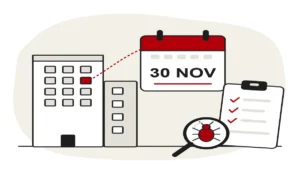
The Renters’ Rights Act 2025 adds no bed bug rules but strengthens tenant protections and council enforcement. Our guide to bed bugs and the Renters’ Rights Act sets out what’s in force. If your HMO is owned by a social landlord, Awaab’s Law and pests explains the timescales that apply from 30 November 2026.
This guide covers England. Wales has its own HMO management regulations, and Scotland and Northern Ireland have separate HMO licensing laws, so check your nation’s guidance.
This is general information, not legal advice. Checked: November 2026.
FAQs
Who pays for bed bug treatment in an HMO?
Usually the landlord, at least at first. The manager must keep shared areas clean and in good repair and let rooms and supplied furniture in clean condition. A tenant might be responsible if they caused the infestation, but with bed bugs that’s hard to show, so treat first and discuss costs with evidence.
Does the whole HMO need treating if one room has bed bugs?
Not always, but the whole house should be inspected: the rooms beside, above and below, and the shared lounge and laundry. Treat every affected area together, or untreated rooms can reinfest treated ones.
Can an HMO tenant refuse access for bed bug treatment?
Under regulation 10 of the HMO management regulations, occupiers must allow the manager in at all reasonable times for purposes connected with their duties, and mustn’t hinder them. Give written notice in line with the tenancy agreement and explain why access is needed.
Should I sleep in the lounge if my room has bed bugs?
It’s best not to. Moving to the lounge or another room can spread bed bugs to other residents. Keep sleeping in your own room and report it in writing.
Can the council help with bed bugs in an HMO?
Yes. If the landlord or agent doesn’t act, tenants can contact the council’s private housing or environmental health team, which enforces HMO management rules and licensing.
Bed bugs reported in your HMO?
We inspect the reported room, neighbouring rooms and shared areas, then plan treatment around your residents, with a written photo report for your records. ThermoPest is a member of the BPCA and NPTA, and our technicians arrive in unmarked vans.