



Carpet moths are a persistent nuisance in UK homes, silently chewing through wool carpets, rugs, and upholstery with their voracious larvae. If you’re searching for how to get rid of carpet moths without chemicals, you’re likely after an eco-friendly fix that skips harsh pesticides. This guide zeroes in on the ultimate solution: heat treatment from ThermoPest, a UK pest control expert offering a chemical-free way to obliterate moths in one fell swoop. While methods like vacuuming or steaming can help manage the issue, they won’t fully solve it—only heat can deliver complete eradication. Learn more about our heat treatment process at ThermoPest’s Moth Heat Treatment page, which also applies to moths.
In this UK eco-guide, we’ll explain why heat is the gold standard for how to get rid of carpet moths without chemicals, explore why other natural methods fall short, and show you how to protect your home sustainably. For a deeper dive into moth behavior, check out our general moth information page. Let’s get started.
Understanding Carpet Moths: Why Half-Measures Fail
Carpet moths—typically the common clothes moth (Tineola bisselliella) or case-bearing clothes moth (Tinea pellionella)—feed on natural fibres like wool and silk. Their larvae do the damage, munching on keratin and leaving bald patches or silky webs. In the UK’s damp climate, these pests thrive, especially in homes with wool carpets or vintage rugs. The lifecycle—eggs hatching in 4-10 days, larvae feeding for months—means infestations grow fast if not stopped completely. Methods like vacuuming might remove some larvae, but eggs tucked deep in fibres or under furniture escape, keeping the problem alive. Heat treatment from ThermoPest is the only chemical-free way to hit them all.
The Limits of Common Natural Methods
You might try DIY natural fixes for carpet moths—vacuuming, steaming, or freezing—but they won’t fully eliminate the problem. Here’s why they fall short compared to heat:
- Vacuuming: A HEPA-filter vacuum removes visible larvae and adults, but misses microscopic eggs or grubs in carpet pile. It’s a start, not a solution.
- Steam Cleaning: DIY steam above 55°C kills some larvae and eggs, but lacks the power to reach every corner. Hidden pests survive to fight another day.
- Freezing: Freezing small items like rugs for 72 hours works for portable textiles, but it’s useless for fixed carpets or widespread infestations.
- Natural Repellents: Lavender or cedar sachets deter adult moths from laying eggs, but they don’t touch existing larvae or end an active problem.
These methods manage symptoms, not the root cause. For a complete fix, a heat treatment is typically required.
Chemical-Free Heat Treatment for Carpet Moths
One of the most effective ways to get rid of carpet moths without chemicals is professional heat treatment. Unlike DIY methods that often reduce activity temporarily, heat treatment targets the entire infestation in a single process.
How It Works
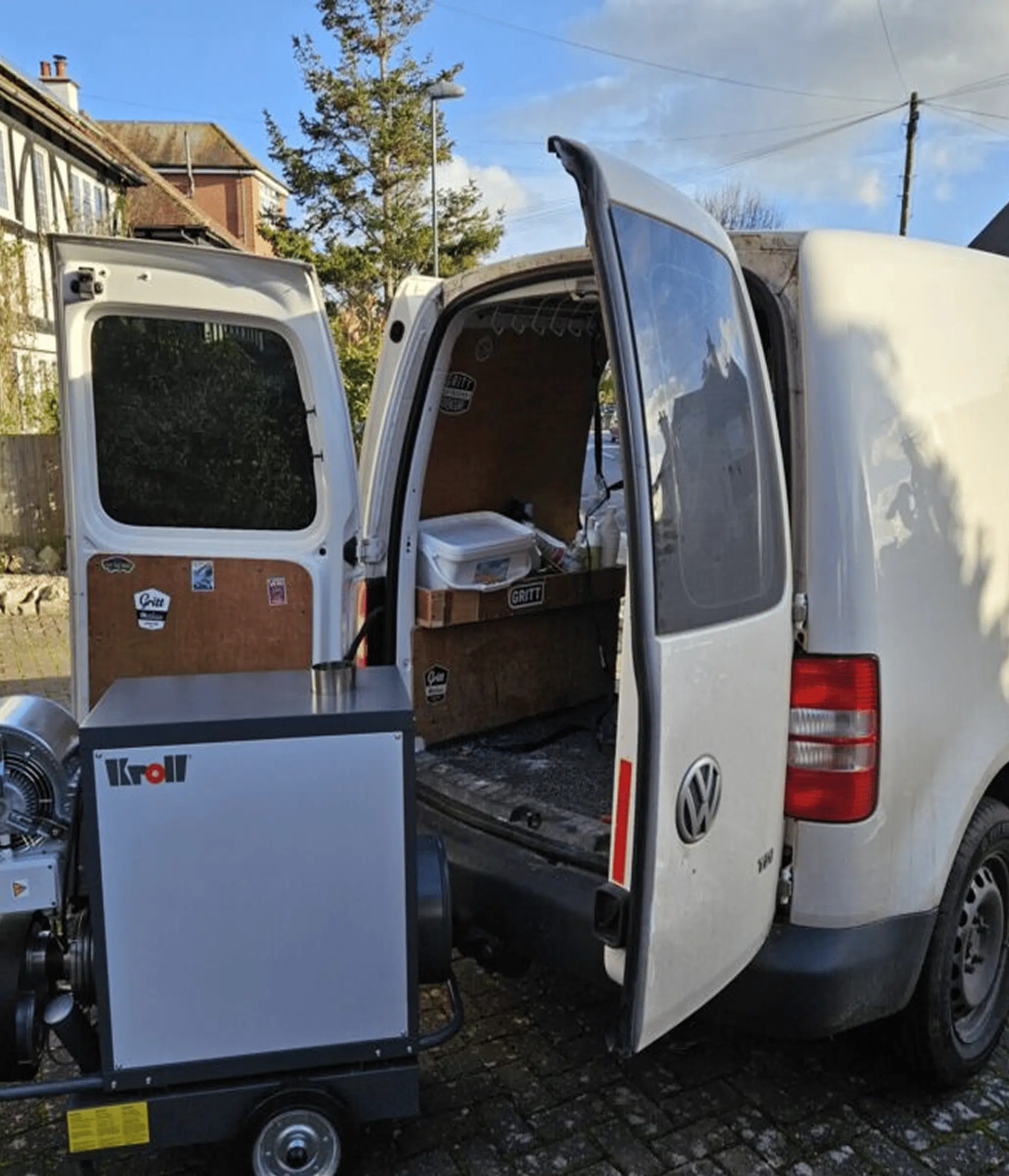
Specialised heating equipment raises the temperature of infested areas to over 55°C, killing adult moths, larvae, and eggs. The heat penetrates deep into carpets, rugs, underlay, furniture, and other hidden harbourages that are difficult to reach with standard cleaning methods.
Why Heat Treatment Is Effective
Many non-chemical approaches only deal with part of the problem. Vacuuming can remove surface larvae but often misses eggs hidden deep within fibres. Steam treatments may help on contact areas but can struggle to provide full coverage across larger spaces. Freezing is generally limited to smaller items, while natural repellents may discourage moths without eliminating an active infestation.
Heat treatment is different because it targets all life stages at once, helping to prevent the infestation from returning. It also leaves no chemical residues behind, making it a popular option for households looking for an environmentally conscious solution.
For UK homes with wool carpets, rugs, and natural fibres, heat treatment is widely considered one of the most reliable chemical-free methods for eliminating carpet moth infestations completely.
Prevention Tips: Supporting Heat Treatment Naturally
After ThermoPest’s heat treatment clears your infestation, prevention keeps moths at bay. These natural tips complement heat’s success:
- Vacuum weekly to remove debris, though it won’t stop eggs—heat already did that.
- Store woollens in airtight containers with cedar or lavender to deter adults.
- Use dehumidifiers to cut humidity, a moth breeding booster in the UK
- Set sticky moth traps to monitor new activity and catch adults early.
The Risk of Relying on Incomplete Methods
Relying solely on vacuuming or steaming when trying to get rid of carpet moths without chemicals can allow the infestation to continue unnoticed. Surviving eggs and larvae can quickly restart the cycle, leading to ongoing damage to carpets, rugs, and natural fibres commonly found in UK homes. While DIY methods may reduce visible activity, they often fail to eliminate the infestation fully. Professional heat treatment offers a complete, chemical-free solution by targeting all life stages in a single treatment, helping to prevent the problem from returning.
Final Thoughts on How to Get Rid of Carpet Moths Without Chemicals
For UK homeowners looking to get rid of carpet moths without chemicals, heat treatment remains one of the most effective and environmentally friendly solutions available. Methods such as vacuuming, steaming, and natural repellents may help manage activity temporarily, but they rarely eliminate hidden eggs and larvae completely. Professional heat treatment targets every stage of the moth lifecycle in a single process, providing a fast and long-lasting solution without relying on heavy chemical use. In homes where wool carpets, rugs, and natural fibres are common, a complete treatment approach is often the best way to stop further damage and prevent reinfestation.