No. Vinegar doesn’t kill carpet moths, their eggs or their larvae in any reliable way. It can clean surfaces and may briefly put adult moths off with its smell, but it can’t reach larvae feeding deep in carpet pile, under furniture or in stored clothes. Freezing, thorough vacuuming and professional treatment work far better.
Reviewed by James Rhoades, Owner, ThermoPest · Last reviewed 15 October 2026
Vinegar is cheap, already in most kitchen cupboards and feels like a safe first thing to try. If you’ve found bare patches in a rug or small holes in a jumper, it’s natural to reach for it. Below is what vinegar can and can’t do against moths, what to try instead, and when it’s time to get help.
Why do people use vinegar for moths?
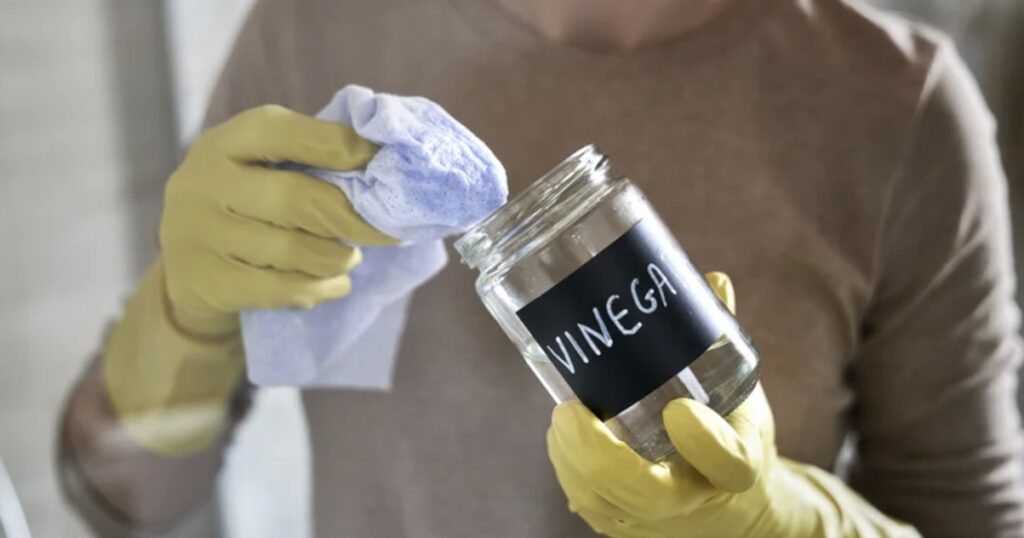
Vinegar has a reputation as an all-purpose natural cleaner, and plenty of home tips suggest spraying it on carpets or wiping wardrobes with it to get rid of moths. The idea is that its acidity or strong smell will kill or drive away the insects.
The problem is that it’s not the adult moths that cause the damage. According to the British Pest Control Association (BPCA), it’s the larvae that do the damage, feeding on natural fibres such as wool, hair, cashmere, silk and cotton. Any remedy that only bothers the adults leaves the real problem in place.
Does vinegar kill moth eggs and larvae?
Not in any way you can rely on. Moth eggs are tiny and laid deep in the fibres, along carpet edges, under furniture and in the folds of stored clothes. Larvae spin protective silk tubes or cases and feed in dark, undisturbed spots. A spray of vinegar wets the surface but doesn’t soak every hiding place, and it evaporates quickly, leaving no lasting effect.
The moth life cycle is also long. The BPCA says common clothes moth eggs take 1 to 5 weeks to hatch, the larvae feed for 2 to 7 months, and the whole life cycle takes about 3 to 10 months. So even if a spray killed a few larvae it touched, new ones would keep hatching from eggs you missed.
Does white vinegar kill moths any better?
No. White vinegar, cider vinegar and cleaning vinegar all work in much the same way. White vinegar is popular for cleaning because it doesn’t stain as easily, but it isn’t any more effective against moths, eggs or larvae.
How much vinegar does it take to kill moths?
There isn’t an amount that works. Using more vinegar doesn’t make it reach larvae deep in a carpet, and soaking a wool carpet or rug can mark it, weaken it and leave it damp for a long time. Dampness won’t help you. If you want to use vinegar at all, use it the way you would for cleaning: wiped on hard surfaces, not poured into carpets.
Do moths hate vinegar? Does it repel them?
Many people find that a strong smell such as vinegar, lavender or cedar seems to keep moths away, but there’s little evidence that any of them stops an infestation. A smell might make a drawer less attractive to an adult moth for a short time. It won’t affect eggs already laid or larvae already feeding, and once the smell fades, you’re back where you started.
Think of smells as, at most, a small extra once the problem has been dealt with, not as a way to deal with it.
How to Get Rid of Carpet Moths Naturally: What Actually Helps
If you want to avoid shop-bought insecticides, these steps do more than vinegar. They work best together, and for a large or long-running infestation they’re unlikely to be enough on their own.
Vacuum Thoroughly and Often
The BPCA advises vacuuming and cleaning carpets and rugs frequently, particularly in the corners and crevices, and doing the same for wardrobes and drawers. Pay attention to carpet edges along skirting boards, under beds and sofas, and anywhere furniture rarely moves. Empty the vacuum or change the bag outside straight away so larvae and eggs don’t get back in.
Freeze Affected Clothes and Small Items
For clothing, the BPCA recommends putting items in the freezer at -18°C for at least two weeks, and leaving them longer the more clothes you freeze at once. Seal items in a plastic bag first. This works well for jumpers, scarves and small rugs, but obviously not for fitted carpet.
Be Careful With Hot Washing
Hot washing sounds like the obvious fix, but the BPCA doesn’t recommend it for clothes moth damage, because the natural fibres that moths feed on usually carry care labels saying not to wash above 30°C. Follow the label, and use the freezer for wool, cashmere and silk instead.
Clean and Check Stored Clothes
Larvae prefer things that are left alone. Take everything out of affected wardrobes and drawers, check seams, collars and folds, vacuum the empty space, and wipe it down. Store clean natural-fibre clothes in sealed bags or boxes so adult moths can’t reach them to lay eggs.
Use Traps to Monitor, Not to Cure
Moth traps catch some adult moths. They’re useful for showing whether moths are still active and where, but they don’t catch the larvae doing the damage, so they won’t clear an infestation on their own.
For a fuller step-by-step plan, see our guide on how to get rid of carpet and clothes moths.
| Method | Kills eggs and larvae? | Best used for |
|---|---|---|
| Vinegar spray | Not reliably | Wiping hard surfaces when cleaning |
| Lavender, cedar and other smells | No | A small extra in stored clothes after the problem is dealt with |
| Thorough vacuuming | Removes many, doesn’t kill all | Carpets, rugs, edges, wardrobes and drawers |
| Freezing (BPCA: -18°C, at least two weeks) | Kills larvae on items that fit, says the BPCA | Clothes, scarves, small rugs |
| Traps | No | Checking whether moths are still active |
| Professional treatment | Yes, as part of a planned treatment | Fitted carpets, widespread or returning infestations |
Does vinegar kill clothes moths or pantry moths?
Clothes Moths
Carpet moths and clothes moths are usually the same insects, mainly the common clothes moth, so the answer is the same: vinegar won’t reliably kill them. Freezing, cleaning and careful storage are the steps that make a difference to clothes.
Pantry Moths
Moths in food cupboards are a different problem. Here, vinegar does have a small, sensible role. Once you’ve thrown away any infested food and vacuumed the shelves, wiping the cupboard down with a vinegar and water mix is a reasonable way to clean it. It’s the clear-out that matters, not the vinegar. Keep dry foods in sealed containers afterwards.
The Risk of Relying on Vinegar
The real cost of trying vinegar is time. While you spray and wait, larvae keep feeding on your carpets, rugs and clothes, and new eggs keep hatching. Wool carpet and good clothing are expensive to replace, and damage often isn’t noticed until a bare patch appears under a sofa or along a wall.
Carpet moths are not a health risk in the way some pests are. Our guide are carpet moths dangerous? explains what they can and can’t do. If you keep seeing moths in more than one room, read why there are so many moths in your house.
When to Get Professional Help
It’s worth calling a professional if:
- you keep finding larvae, cases or new damage after cleaning and freezing;
- damage is in fitted carpet, especially under furniture or along skirting boards;
- you’re seeing moths in several rooms;
- valuable rugs, upholstery or clothing are affected.
For most moth infestations, the BPCA recommends contacting a professional pest management company, and notes that moth infestations can require several visits. Our carpet moth treatment is heat-led, with targeted spray where it’s needed, and starts with an inspection to find where the larvae are feeding. Return visits may be needed, and we’ll tell you what to expect before we start.
FAQs
Does vinegar kill moth larvae?
Not reliably. Larvae feed deep in carpet pile, under furniture and in folded clothes, often inside protective silk cases. Vinegar doesn’t reach most of them and evaporates quickly, so any larvae it misses keep feeding.
Does vinegar kill moth eggs?
No. Moth eggs are tiny and tucked deep into fibres and crevices. A vinegar spray won’t reach or destroy them reliably. Vacuuming removes many eggs, and freezing is the BPCA’s advice for infested clothes and small items.
How do you get rid of moths with vinegar?
You can’t get rid of a moth infestation with vinegar alone. Use it only for cleaning hard surfaces, such as shelves and drawer bases, after you’ve vacuumed. The steps that make the real difference are vacuuming, freezing clothes and, for carpets, professional treatment.
What kills carpet moths?
For clothes and small items, the BPCA says freezing at -18°C for at least two weeks should kill larvae. Regular, thorough vacuuming removes many eggs and larvae. For fitted carpets and widespread infestations, professional treatment is the most dependable option.
Do moths like vinegar?
Moths don’t seem to be drawn to vinegar, and some people believe the smell puts them off. But there’s little evidence that it keeps moths away for long, and it has no effect on eggs or larvae already in your carpet or clothes.
Still finding moth damage?
If you’ve found larvae, cases or fresh bare patches, an inspection will show where they’re feeding and how far they’ve spread. ThermoPest is a member of the BPCA and NPTA, and our technicians arrive in unmarked vans.