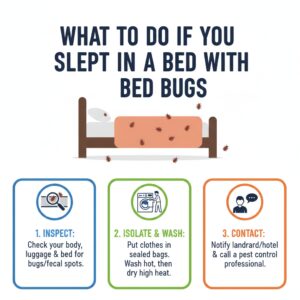
Short answer: yes, ironing kills bed bugs and their eggs on the fabric it touches, because a household iron runs far hotter than the roughly 48°C that bed bugs cannot survive. But ironing only treats what is under the plate. For clothes, a hot wash followed by a long, hot tumble dry is faster and more reliable, and none of it will clear the infestation in your bedroom. This guide covers each method, how long to run it, and what to do with clothes you cannot wash.
Why heat works on bed bugs in clothes
Bed bugs, nymphs and eggs die quickly once they are held above about 48°C, and almost instantly at 60°C. The challenge is not the temperature itself but getting it all the way into seams, folds, pockets and thick fabric, and holding it there long enough. That is why small loads and long drying times matter more than the number on the dial.
Does ironing kill bed bugs?
Yes, on the area you iron. Most irons reach well over 100°C, so a slow pass over both sides of a garment kills bed bugs and eggs on contact. Use it for items that cannot go in a dryer but can take an iron, and for a final pass along collars, seams and hems.
- Go slowly and press both sides, paying attention to seams, pockets and folds.
- Use steam on fabrics that allow it, which helps heat move through thicker material.
- Bag items straight away in a clean, sealed bag so they are not re-infested.
The limits: ironing is slow for a full wardrobe, it cannot reach inside thick items, and the heat and movement can push bugs into nearby cracks before they are killed. Treat it as a finishing step, not your main method.
Step by step: how to kill bed bugs on clothes
- Bag at source. Put clothes into sealable bags in the room where they are stored, and seal them before carrying them through the house. Do not hold armfuls against your body.
- Sort into small loads. Overloaded machines leave cool spots. Check care labels and group by the hottest temperature each fabric allows.
- Wash at 60°C where the label allows. A cool or eco wash is not reliable on its own, so if a label says 30–40°C, rely on the dryer step instead.
- Tumble dry on the hottest safe setting for at least 30 minutes once the load is hot. Allow 45–60 minutes in total for towels, jeans, hoodies and bedding. For many items, drying does more of the work than washing.
- Bag clean items immediately in fresh bags or lidded plastic boxes, and keep them away from beds and sofas until your home has been treated.
Can bed bugs survive a washing machine?
Some can. A cold or short wash may drown or dislodge some bugs, but eggs and adults can survive a low-temperature cycle. A 60°C wash kills them; below that, always follow with a long, hot tumble dry.
Do I need to wash all my clothes?
Usually not. Treat everything from the affected bedroom, anything worn or left near the bed or sofa in recent weeks, and all bedding. Clothes kept sealed in drawers or wardrobes in rooms with no activity are lower risk; inspect them rather than washing everything you own. If you are booking a heat treatment, follow our preparation guide, because some items can stay in the rooms being heated.
Clothes you cannot wash: dry cleaning, freezing and steam
- Dryer only: if the label allows tumble drying but not hot washing, a 30–60 minute hot dry is enough on its own.
- Dry cleaning: the solvent and heat in a commercial dry-cleaning cycle kill bed bugs. Take items in sealed bags and tell the cleaner, so the bag is not opened on their counter.
- Freezing: seal items in a bag and keep them at −18°C for at least four days once the middle of the item is fully frozen. Defrost in the bag.
- Steam: a handheld steamer works on surfaces if moved slowly, but it will not reliably reach inside thick items.
Does vinegar in the wash kill bed bugs?
No. Vinegar may kill a bug it is poured directly onto, but in a wash it is diluted and does nothing to eggs. Temperature is what matters, so spend your effort on hot washing and drying instead.
Common mistakes that spread bed bugs
- Carrying unbagged clothes through the house or to a shared laundrette.
- Putting clean laundry back on the bed or sofa it came from.
- Throwing clothes away: it is rarely necessary and moving them spreads bugs.
- Moving to sleep in another room, which can spread the problem to it.
Why clean clothes are not the same as a clear home
Bed bugs live mostly in and around where you sleep: mattress seams, bed frames, headboards, skirting boards and furniture joints. Washing clothes stops you carrying them around, but it does not touch those hiding places. That is what professional bed bug heat treatment is for: we heat the rooms themselves and monitor temperatures in the hardest-to-heat spots, so bed bugs and eggs are killed where they actually live.
Most homes are treated in a day, you can move back in 2 hours after we finish, and whole-property treatments are covered by our 12-week guarantee. If you are in London, see bed bug treatment in London, or check our prices.
Quick answers
How long should I tumble dry clothes to kill bed bugs?
At least 30 minutes on the hottest safe setting once the load is fully hot, which usually means 45–60 minutes in total for thicker items.
What temperature wash kills bed bugs?
60°C. Lower temperatures are not reliable on their own, so follow them with a long, hot tumble dry.
Can bed bugs live in clothes?
They can hide in clothes for a while, especially items left near the bed, but they prefer to stay close to where people sleep. See can bed bugs live in clothing?