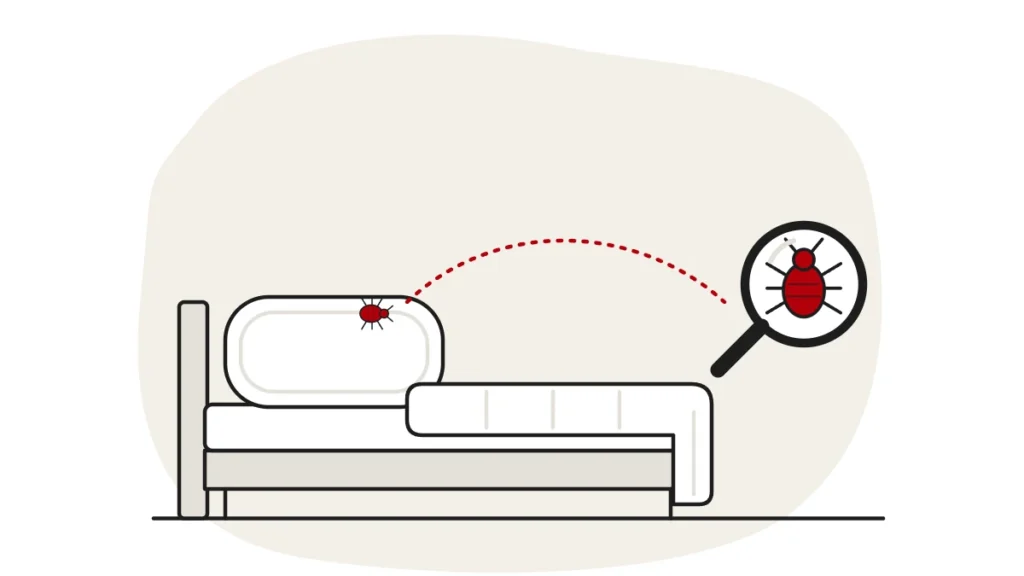
It’s very unlikely. Bed bugs bite exposed skin while you sleep, then crawl back to hiding places in and around the bed. They don’t live on people or burrow into skin, and they aren’t known for going into ears. A bite on your ear or earlobe is possible, though, because that’s exposed skin.
Reviewed by James Rhoades, Owner, ThermoPest · Last reviewed 15 October 2026
If you’ve found bites, or you’ve woken up with an odd feeling in your ear, it’s natural for your mind to jump to the worst. This guide explains what bed bugs actually do at night, what the NHS says to do if you think something is stuck in your ear, and how to find out whether bed bugs are really the cause. We’re pest specialists, not doctors, so for anything to do with your ear itself we point you to NHS advice.
Can bed bugs go in your ear?
It isn’t impossible for any small crawling insect to end up somewhere it shouldn’t, but bed bugs aren’t drawn to ears. The NHS describes bites on skin exposed while sleeping, and bed bugs hiding in places such as bed frames, mattresses and furniture. Bed bugs bite at night, usually on skin left uncovered in bed, and spend the rest of their time hidden near where people sleep. Nothing in the NHS guidance, or in our experience as bed bug specialists, suggests they live in, or head for, ears.
So, honestly: it’s rare. It’s far more likely that a bed bug bites the skin on or around your ear than that one goes inside it.
What Bed Bugs Actually Do at Night
- They come out to feed, then leave. Bed bugs bite people at night while they sleep and hide during the day.
- They hide near the bed, not on you. Our technicians find them in mattress seams, bed bases, bed frames, headboards, chests of drawers, cracks and behind wallpaper, usually within a couple of metres of where people sleep. The NHS also lists bed frames, mattresses, clothing and furniture.
- They don’t live on the body. Bed bugs don’t live on humans or burrow into the skin.
- They’re flat and good at hiding. Their thin, flattened bodies let them stay hidden in narrow cracks and crevices. That’s why seams and joints near the bed matter so much more than ears.
Myth vs What the Sources Say
| The worry | What the sources say |
|---|---|
| Bed bugs crawl into ears at night | They bite exposed skin at night, then go back to hiding places near the bed |
| They can live in your ear | They don’t live on humans or burrow into the skin |
| They lay eggs on people | They live and hide in bed frames, mattresses and furniture, not on the body |
| The buzzing in my ear is a bed bug | Bed bugs are wingless, so they don’t fly or buzz |
| Bites mean I’ll catch something | Bed bugs are not known to spread disease |
Can bed bugs live or lay eggs in your ear?
No. Because bed bugs don’t live on people, they don’t set up home in ears or lay eggs there. Their eggs are found in the same places the bugs hide: seams, joints, cracks and crevices in and around the bed.
If you’re finding bites but can’t see any bugs, the answer is in the bedroom, not your ear. Our guide to getting bitten at night with no sign of bed bugs walks through what to check.
Do bed bugs bite ears?
They can. The NHS says bites often appear on skin exposed while sleeping, like the face, neck and arms. If your ear is out of the covers, the ear, earlobe or the skin behind the ear can be bitten like any other exposed skin.
The NHS describes bed bug bites as raised and itchy, often in a line or grouped together. Some people react more strongly, with intense itching and possibly painful swelling. For more on where bites tend to show up, see where bed bugs bite, and for pictures and patterns, our guide to what bed bug bites look like.
Is it a bed bug bite or something else?
A single itchy spot on your ear could be many things. Bites from bed bugs tend to keep appearing after nights in the same bed, on skin that was uncovered. If you’re not sure whether you’re looking at bites or a skin reaction, our guide to bed bug bites vs hives explains the differences. A pharmacist can look at a rash or bite and suggest something for the itching.
What to Do If You Think a Bug Is in Your Ear
Whatever the insect, the NHS advice is the same as for anything stuck in the ear. On its earache page, the NHS says:
- Do not put anything inside your ear, such as cotton buds.
- Don’t try to remove anything stuck in your ear yourself.
- Ask for an urgent GP appointment or contact NHS 111 if you have earache and something stuck in your ear. On the same page, the NHS lists other reasons to get urgent help alongside earache, including fluid coming from the ear, swelling around the ear, a change in hearing, or earache that has lasted more than 2 to 3 days.
- A pharmacist can help with earache and tell you whether you need to see a GP.
Please don’t poke around with tweezers, cotton buds or anything else. If you’re worried, get it looked at. The full guidance, including advice for young children, is on the NHS earache page.
A Crawling or Tickling Feeling in Your Ear
Once you start worrying about bed bugs, it’s very common to notice every itch and tickle, especially at night. A crawling feeling in the ear doesn’t necessarily mean something is inside it. If you’re worried, follow the NHS advice above. Then check the bedroom, which is where bed bugs would actually be.
How to Tell If Bed Bugs Are the Real Cause
Bites alone can’t confirm bed bugs. The bedroom has to be checked too. The NHS lists these signs:
- Bites on skin that was uncovered in bed, often in a line or group.
- Spots of blood on your bedding.
- Small brown spots on bedding or furniture (bed bug droppings).
- Bed bugs themselves: the NHS says adults are around 5mm long.
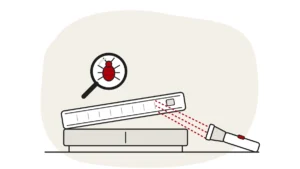
Use a bright torch and look along mattress seams and piping, the corners of the bed frame, headboard joints and fixings, and the edges of the carpet or skirting near the bed. Look for live bugs, pale shed skins and those small dark spots.
Do the Simple Things That Help
The NHS suggests washing affected bedding and clothing on a hot wash (60C) and tumble drying on a hot setting for at least 30 minutes. It also says items that can’t be washed can be sealed in a plastic bag and put in the freezer for 2 to 3 weeks. These steps help with what’s in the bag, but they won’t clear bugs hiding in the bed frame or furniture.
Common Mistakes When the Worry Takes Over
- Using foggers, bug bombs or smoke bombs. They tend to scatter bed bugs into new hiding places, including other rooms, rather than clearing them.
- Moving to the sofa or another bedroom. Bed bugs can follow you, and the problem can spread to new areas of the home.
- Sleeping with the light on. It’s a common instinct. Read will sleeping with the lights on stop bed bugs before you rely on it.
- Trying DIY heat with hairdryers or heaters. Bugs and eggs survive in the spots you can’t reach evenly, and it’s a fire risk.
- Throwing furniture out in a panic. Carrying an infested mattress through a building can spread bugs along the way. Get it checked first.
If It Is Bed Bugs
Treating bites, or worrying about your ears, won’t stop new bites while bed bugs are still in the bedroom. The first step is knowing what you’re dealing with. A professional bed bug inspection confirms whether bed bugs are present and where they’re hiding, so you’re not guessing. If they are, ThermoPest’s treatment is heat-led, with targeted spray where it’s needed, and reaches the seams, joints and cracks where bugs and eggs hide. You can read how bed bug heat treatment works, and a follow-up visit may be needed to make sure the job is finished.
If you live in a flat, we’ll ask to inspect neighbouring flats too, because bed bugs can move between homes.
FAQs
What happens if a bed bug goes in your ear?
It’s rare, but if you think any insect is in your ear, don’t try to remove it yourself and don’t put anything in your ear, such as cotton buds. The NHS says to ask for an urgent GP appointment or contact NHS 111 if you have earache with something stuck in the ear.
How would I know if a bed bug was in my ear?
We can’t diagnose ear symptoms. The NHS says to ask for an urgent GP appointment or contact NHS 111 if you have earache along with something stuck in the ear, fluid coming from it or swelling around it. A tickle on its own is common when you’re anxious about bites. If you’re unsure, ask a pharmacist or GP.
Do bed bugs buzz in your ear?
No. Bed bugs are wingless, so they can’t fly or buzz. A buzzing near your ear at night is more likely to be a flying insect. Bed bugs crawl, and they spend the day hidden near the bed rather than flying around the room.
Can bed bugs get in your ears and nose?
It’s very unlikely for either. Bed bugs feed on exposed skin and then go back to hiding near the bed. They don’t live on humans or burrow into the skin. If you think something is stuck in your ear, don’t try to remove it yourself; ask a pharmacist, GP or NHS 111 for advice.
Can bed bugs bite your earlobe?
Yes. The NHS says bites often appear on skin exposed while sleeping, such as the face, neck and arms, and your earlobe is exposed skin too. Look for bites that keep appearing after nights in the same bed, and check the mattress and bed frame for signs.
Worried about bites near your ears?
If you’ve found bites and signs on the mattress, an inspection will confirm what you’re dealing with and where the bugs are hiding. ThermoPest is a member of the BPCA and NPTA, and our technicians arrive in unmarked vans.