You can pick up bed bugs on the Tube, buses or trains, but the risk is low. Seats on public transport aren’t a good home for bed bugs, so the real danger is a bug crawling from someone else’s bag or coat onto yours and coming home with you. A few simple habits make that much less likely.
Reviewed by James Rhoades, Owner, ThermoPest · Last reviewed 15 October 2026
Stories and videos about bed bugs on public transport spread quickly, and they can make every commute feel risky. This guide sets out what transport operators have actually said, how bed bugs move between passengers, and what to do when you get home if you’re worried.
Are there bed bugs on the London Underground?
In October 2023, when reports of bed bugs in Paris were in the news, a Transport for London spokesperson told ITV News that TfL was “not aware of any confirmed sightings of bedbugs on the transport network in London”. TfL also said its cleaning teams are briefed to spot and report bed bugs.
That doesn’t mean a bed bug has never been on a Tube train. Huge numbers of people carry bags and coats through the network, and bed bugs travel with people. But no one has shown that Tube trains are infested, and a seat you sit on for a short journey is not where most home infestations begin.
Can you get bed bugs from public transport?
It’s possible, but it isn’t common. Bed bugs live close to where people sleep, because that’s where they can feed undisturbed and hide in dark seams and cracks nearby. A train carriage or bus is busy, often well lit and constantly moving, so it’s a poor place for them to settle and breed.
How Bed Bugs Move Between Passengers
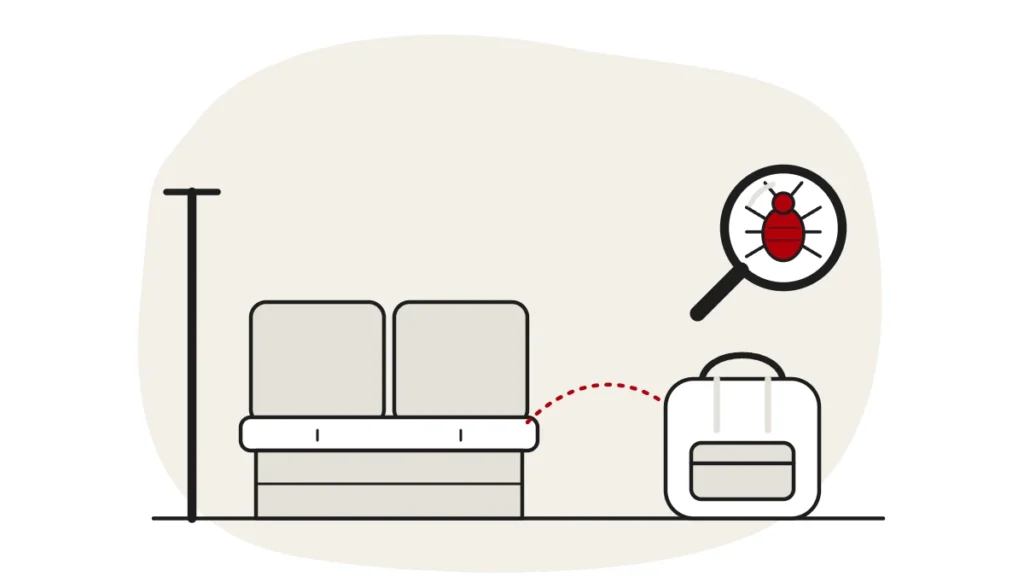
The usual route is a hitchhiker. Someone with bed bugs at home carries one in the seam of a bag, a coat or a fold of clothing. On a packed train, that bug can crawl onto the bag, coat or trouser leg next to it. If it ends up in your belongings, it can travel home and look for somewhere to hide near a bed or sofa.
Can bed bugs live on train seats?
A bed bug can drop onto a seat and survive there for a while, because bed bugs can go a long time without feeding. Upholstered seats have seams and gaps where a stray bug could tuck in. But they don’t build up colonies on seats the way they do in a bedroom. Without a sleeping person nearby to feed on, there’s little to keep an infestation going.
Bed Bugs on Trains: What’s Been Reported in the UK
There have been confirmed cases on mainline trains, though they’ve been small and contained. In October 2026, ITV News reported that Southeastern had found bed bugs in the driver’s cabs of two trains based at its Hastings depot. Southeastern said bed bugs were not found in passenger areas. Both trains were taken out of service for treatment, two more were checked and found clear, and some services were cancelled while the work was done.
Cases like this tend to make headlines precisely because they’re unusual. The operator’s response, taking trains out of use until they’re checked and cleared, is what you’d hope to see.
Buses, taxis and ride-shares: is the risk different?
The risk is the same in kind on any shared seat: buses, Overground and national rail trains, taxis and ride-share cars. Longer journeys where you sit still with your bag beside you give a bug a little more chance to move across, but it’s still the exception, not the rule. Overnight sleeper trains are closer to a hotel stay, because people sleep there, so treat them the way you would a hotel bed.
Cars are a slightly different case, as a bug brought in on a bag can stay in a car you use every day. Our guide on whether bed bugs can infest cars covers what to check.
How to Avoid Bed Bugs on Public Transport
You don’t need to stand for every journey or wrap your bag in plastic. A few easy habits cover most of the risk:
- Keep your bag on your lap or between your feet rather than pushed against other people’s bags.
- Use bags with fewer deep seams and outer pockets, or keep them zipped.
- If you see a small, flat, reddish-brown insect on a seat, sit somewhere else and tell staff.
- On long trips and sleeper trains, keep luggage off the berth and check the seams of your case when you arrive.
- When you get home, put bags and coats on a hard surface by the door, not on the bed or sofa.
The table shows where the realistic risk sits and what’s worth doing about it.
| Where | Realistic risk | What’s worth doing |
|---|---|---|
| Tube, bus, short train trips | Low: brief contact, seats aren’t a home for bed bugs | Keep your bag close and zipped; bags off the bed at home |
| Long train or coach journeys | Low, a little higher with long contact between bags | Check bag seams after the trip |
| Sleeper trains | Similar to a hotel stay, because people sleep there | Check the berth seams and keep luggage off the bed |
| Taxis and ride-shares | Low | Nothing special; check your own car if you find signs |
If you’ve been travelling with a suitcase, see our guide to checking and treating bed bugs in luggage.
What to Do When You Get Home
For most commutes you don’t need to do anything beyond keeping bags and coats off beds and sofas. If you think you sat near bed bugs, or saw one on your belongings:
- Check the seams, pockets and zips of your bag in good light, away from the bedroom.
- Put the clothes you wore straight in the wash. The NHS advises a hot wash (60°C) and tumble drying on a hot setting for at least 30 minutes for items that may have been in contact with bed bugs.
- For things you can’t wash, the NHS suggests sealing them in a plastic bag in the freezer for 2 to 3 weeks.
Our guide on whether washing, drying or ironing kills bed bugs on clothes goes into more detail, and if you’re worried about your workplace too, read how to avoid bringing bed bugs home from work.
Did I get bitten on the Tube?
Probably not. Bed bugs usually feed on people who are asleep or sitting still for a long time, and busy, moving places don’t suit them. Bites that appear overnight, often in a line or small cluster on skin uncovered in bed, point to bed bugs at home or wherever you slept, not to your commute. The NHS says bites usually clear up on their own in a week or so; a pharmacist can suggest something for the itching.
If bites keep appearing, check the bed: mattress seams and piping, the bed frame and headboard, and nearby furniture. Look for live bugs (the NHS says adults are around 5mm long), pale shed skins, small dark spots and tiny blood marks on sheets. Our guide to where bed bugs come from explains the more common ways they get into homes.
If You’ve Brought Bed Bugs Home
Act early, but don’t panic. Don’t move furniture or bedding between rooms, and avoid foggers and bug bombs, which tend to scatter bed bugs into new hiding places. The NHS says DIY methods are unlikely to get rid of bed bugs completely and recommends contacting your council or a pest control service.
ThermoPest’s bed bug heat treatment is heat-led, with targeted spray where it’s needed, so it reaches the seams and cracks where bugs and eggs hide. Follow-up visits may be needed, and in flats we ask to inspect neighbouring flats too. If you live in the capital, see our bed bug treatment in London, or check our prices.
FAQs
Are there bed bugs on the Tube?
Transport for London said in October 2023 that it was not aware of any confirmed sightings of bed bugs on its network, and that cleaning teams are briefed to report them. A stray bug carried on a passenger’s bag is always possible, but there’s no evidence of Tube trains being infested.
Can you get bed bugs from public transport?
You can, but it’s uncommon. The risk is a bug moving from another passenger’s bag or coat onto yours, not the seat itself. Keeping your bag close and zipped, and keeping bags and coats off your bed at home, covers most of the risk.
Have bed bugs been found on UK trains?
Yes, occasionally. In October 2026 Southeastern found bed bugs in the driver’s cabs of two trains and took them out of service for treatment, saying none were found in passenger areas. Cases like this are reported because they’re unusual.
How long can bed bugs live on a train seat?
Bed bugs can go a long time without feeding, so a bug that drops onto a seat may survive for a while. They don’t breed there, though, because there’s nowhere quiet to feed on a sleeping person. The concern is a bug getting into your belongings.
How do I avoid bringing bed bugs home from the Tube?
Keep your bag on your lap or between your feet, zip it up, and put bags and coats on a hard surface by the door when you get home. If you think you sat near bed bugs, wash your clothes on a hot wash and check the seams of your bag.
Worried you’ve brought bed bugs home?
If you’ve found bites or signs on the mattress, an inspection will confirm what you’re dealing with. ThermoPest is a member of the BPCA and NPTA, and our technicians arrive in unmarked vans.